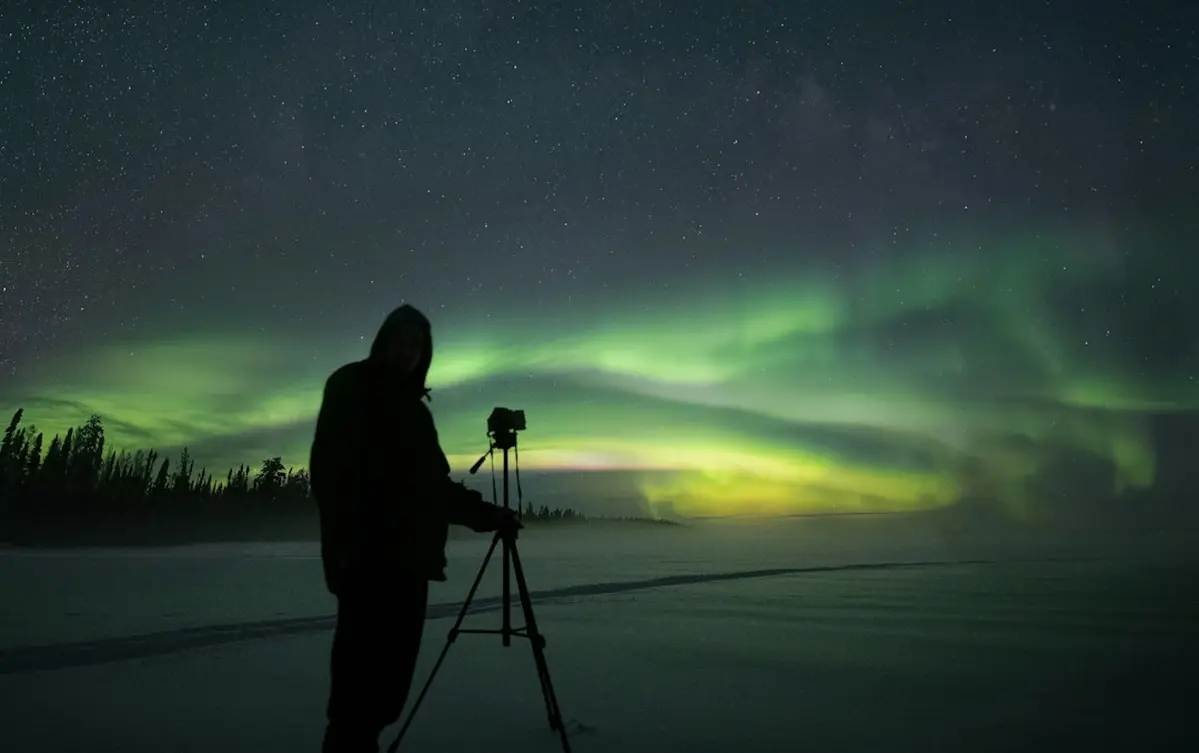
For most aurora nights in deep winter, the pick is The Heat Company Heat 3 Smart Pro, rated comfortable to -30°C (-22°F) by Yukon-based photographer Dan Carr. If your nights stay in ordinary mid-winter cold, the Vallerret Markhof Pro V3 gives you better finger access for less bulk. If you already own a glove you like, put the Vallerret Alta Arctic Mitt over it. If you want a thin touchscreen liner to wear under any of these, use The North Face Etip Glove. The choice comes down to three things: the temperature rating each maker or reviewer has published, how you reach the camera's controls without baring your fingers, and what each reviewer says the glove is wrong for. This blog has not tested any of these gloves. Every rating and feature below names the maker or review that published it, and where the research has no price, this page says so rather than guessing.
Best for deep-cold nights: The Heat Company Heat 3 Smart Pro
This is the glove for nights well below freezing. In his photography gloves guide on Shutter Muse, Dan Carr rates it comfortable down to -30°C (-22°F) and makes it his top pick for extreme cold. Carr lives in the Yukon and has used gloves in temperatures as low as -40°C, so the rating comes from someone who shoots in the conditions you are planning for.
It combines a built-in Polartec Wind Pro liner with 100% recycled Primaloft insulation. The fingertips use conductive textiles, so you can work a touchscreen without taking the glove off. Carr does not recommend battery-heated gloves for this job. He prefers passive insulation backed by hand warmers because it is more reliable.
Price: none of the sources consulted for this page lists one.
The drawback: the research gives no fault specific to this glove. The general tradeoff still applies. Treeline Review's winter glove guide notes that gloves warm enough for true Arctic cold usually give up the fine motor control you need for dials and tripod adjustments.
Skip it if your forecast lows stay mild. For warmer nights, Carr points to The Heat Company's lighter Heat 2 Softshell instead. It is rated to -18°C (0°F), costs under $80, and he calls it a "best-of-the-rest option for slightly warmer temperatures".
Best for milder winter shoots: Vallerret Markhof Pro V3
The Markhof Pro V3 gives the best finger access of the four. Digital Camera World's photographer glove guide, updated September 25, 2026, names it Best for Comfort.
Vallerret's spec sheet lists:
- a merino wool liner
- DWR-treated goat leather with Thinsulate insulation
- FlipTech magnetic caps on the thumb, index and middle finger, so you can uncover only the fingertip you need for a dial or screen
- a suede patch for wiping lenses
- an SD card pocket
Digital Camera World adds three more features: hand warmer compartments, an integrated tripod key, and sizes from XS to XXL. The tripod key matters for aurora work, where the camera sits on a tripod for long exposures. For the exposures themselves, see the camera settings for aurora page.
Price: not given in the research.
The drawback: both Vallerret and Digital Camera World place it in a mid-winter tier, not an Arctic one. Digital Camera World says plainly that it is not built for extreme Arctic temperatures.
Skip it if you expect long waits on the coldest inland nights, unless you also plan to wear an over-mitt on top.
Already own gloves? Vallerret Alta Arctic Mitt
The Alta Arctic Mitt is an outer shell, not a complete glove. Vallerret's own guide to winter photography gloves puts it in its coldest tier, Arctic Winter, and describes it as a mitt you wear over a glove you already have.
Two features suit aurora work:
- A FlipTech mitt cap unzips to expose the inner glove's fingers, so you can reach the camera without pulling the mitt off.
- A carrying harness lets the mitt hang from your wrist while you shoot.
This follows the layering method Treeline Review recommends: a thin, dexterous liner underneath and a bulky shell on top that you open only briefly for fine adjustments.
Price and temperature rating: the research has neither, beyond Vallerret's tier label.
The drawback: the mitt is only as good as the glove inside it. On its own it does nothing for dexterity.
Skip it if you do not already own a glove you are happy to wear underneath.
Best touchscreen liner: The North Face Etip Glove
Wear the Etip as a liner, not as your only glove. Digital Camera World names it Best All-Around. Its conductive fingertips work with swipes from several fingers, and its stretchy, close fit gives you precise control of buttons and dials.
The same review warns that it is not a good choice on its own for very cold climates, and it names Arctic aurora viewing as one of them. Under the Alta Arctic Mitt, or under any other over-mitt, it becomes the inner layer that does the fine work.
Price: not given in the research.
Skip it if you are buying one pair of gloves for the whole trip. As a single layer it will not be warm enough.
Bare fingers, warmers and when to cover up
None of the sources here publishes how many minutes bare fingers last at a given temperature, so this page cannot give you that figure. What the sources do establish:
- Your fingers cool faster than the rest of you. OSHA's cold stress guide explains that as the body cools, it shifts blood away from the hands and toward the core.
- The main risk threshold is 0°F. OSHA's sawmills eTool says frostbite occurs most often when exposed skin is below 0°F, or when high wind is combined with cold. Check the typical night lows for your destination against that line.
- Uncover briefly, then cover again. Treeline Review's rule is to remove the outer layer only for a quick adjustment and re-cover your hands straight away.
- Keep a disposable warmer as backup. PolarTourist lists HotHands Super disposable warmers at about $1 a pair, lasting 10 or more hours and reaching up to 57°C. It recommends them as a fallback for when battery units fail in extreme cold. The Markhof Pro V3's warmer compartments are built to hold one.
For how disposable warmers compare with rechargeable ones, see hand warmers for aurora nights.
What to buy
- The Heat Company Heat 3 Smart Pro: for deep-cold nights, rated to -30°C (-22°F).
- Vallerret Markhof Pro V3: for mid-winter cold, with the best finger access.
- Vallerret Alta Arctic Mitt: to add Arctic warmth over a glove you already own.
- The North Face Etip Glove: as a touchscreen liner under a mitt, never on its own.
The Smartwool Merino liner glove and the Black Diamond Mercury Mitts are left out because none of the sources consulted here publishes a rating, price or review for either. If you want a merino liner or a classic over-mitt, check for a published review or maker's temperature figure before you rely on one.
Comments
No comments yet. Be the first to comment!
Leave a Comment