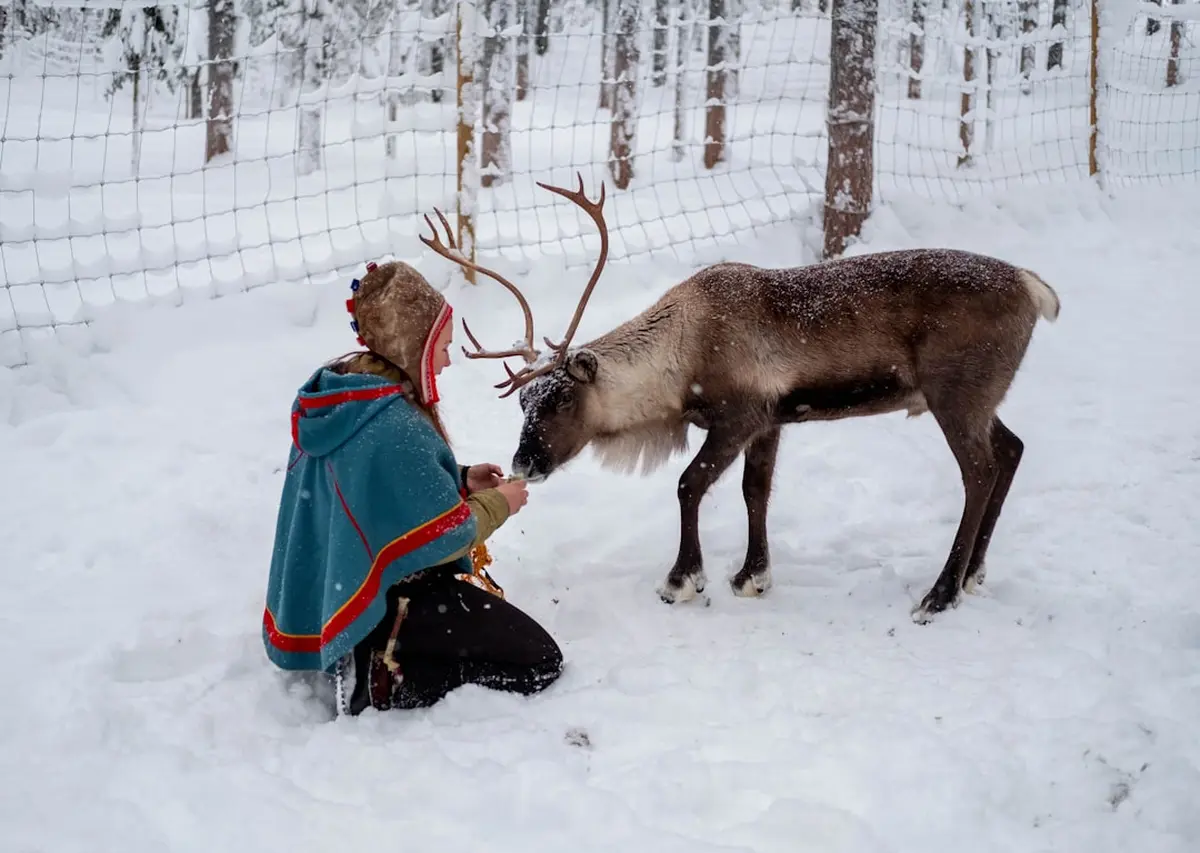
Women hold the presidency of all three Sámi Parliaments at the same time, and that has never happened before. They are Silje Karine Muotka in Norway, Marianne Gråik in Sweden and Pirita Näkkäläjärvi in Finland. The UN's regional information centre in Brussels marked the milestone alongside the first observance of the International Day of the World's Indigenous Women and Girls on 5 September 2026.
If you read no further, take this: it was not one election that did it. Three separate contests, spread across January 2024 to November 2025 and run under three different systems, happened to line up. That matters when you try to work out what it means, because the three offices are not the same office.
Who is now in each chair
Silje Karine Muotka, Norway. Her party, Norske Samers Riksforbund (NSR), took 18 of 39 seats on about 38 per cent of the vote in the 8 September 2025 election, its best showing since 1993. Turnout was roughly 74 per cent, close to that of Norway's general election the same day. Coalition talks with Labour collapsed over the Melkøya gas plant electrification dispute; NSR formed a majority in early October with the Sámi People's Party and the Ávjovári Moving Sámi List. Muotka has led the parliament since 2021 and is the most nationally visible of the three, largely through wind turbine and energy cases.
Marianne Gråik, Sweden. She became board chair of Sametinget on 25 November 2025, the day after the two-seat Vuovdega-Skogssamerna group switched allegiance and flipped the majority. Her own party, Sámiid Riikkabellodat, had won 1,336 votes and 7 seats in the May 2025 election; Jakt- och fiskesamerna won the most votes, 2,238 and 12 seats, and lost the chair anyway. Outgoing chair Håkan Jonsson called it "like a bolt from the blue". Gråik, born in 1966, grew up in Rans sameby, now lives in Jijnjevaerie sameby, and works as a self-employed reindeer herder and accountant.
Pirita Näkkäläjärvi, Finland. Elected president at the parliament's constituent meeting on 30 January 2024, with a term running to 31 December 2027. She was on parental leave from January 2025 and returned to duty on 12 May 2026, with Second Vice President Tuomas Aslak Juuso acting in her place. Her background is unusual for the role: head of Yle Sápmi from 2012 to 2016, mergers and acquisitions work at Merrill Lynch, Nokia and PwC, and doctoral research on yoik at the Sibelius Academy.
The three jobs are not the same job
This is where most coverage of the milestone stops short. Each president leads an institution with different powers, a different electorate and a different relationship to the state. If you are trying to judge what three women at the top actually buys, start here.
| Norway | Sweden | Finland | |
|---|---|---|---|
| Seats | 39 | 31 | 21 plus 4 deputies |
| Elected | Every 4 years, with national elections | Every 4 years, separate Sámi election | Every 4 years, separate Sámi election |
| How you stand | Sámi parties and Sámi lists of national parties | Sámi parties and electoral lists | Individual candidacy, no formal parties |
| President leads | The Governing Council | The Board | The Executive Board |
| Constituencies | Seven | National | National |
The Swedish body is the odd one out, and it is worth knowing why before you read anything into Gråik's mandate. Sametinget is simultaneously an elected representative assembly and a Swedish state administrative authority, a dual role that one comparative analysis describes as limiting its institutional independence. Sweden also splits the leadership: Gråik chairs the executive board, while Johanna Njaita chairs the plenary assembly.
Finland's has just moved in the other direction. The Finnish Parliament passed a new Sámi Parliament Act in June 2025 strengthening self-determination and clarifying the state's obligation to negotiate on matters affecting Sámi people. Implementing those negotiation obligations is the first of Näkkäläjärvi's three stated priorities, ahead of Truth and Reconciliation Committee measures and EU work.
A century of organising, and a brand new UN day
The line UNRIC drew runs back to Elsa Laula Renberg (1877 to 1931), a South Sámi midwife from a reindeer-herding family who founded the world's first Sámi association in Stockholm in 1904 and, in 1910, the Brurskanken Sámi Women's Association in Norway, generally counted as the first independent Sámi women's organisation. She was a driving force behind the first Sámi national congress in 1917, which gathered around 150 participants from Norway and Sweden.
Not a single woman should be missing from our association.
The UN day it coincided with is itself new and was not universally welcomed. The General Assembly adopted resolution A/RES/80/10 on 26 November 2025 by 123 votes to 3, with the United States, Argentina and Israel against and Ethiopia and Turkey abstaining. The date commemorates Bartolina Sisa, an Aymara leader executed in La Paz in 1782. The UN's own framing puts the case in numbers: roughly 185 million Indigenous women worldwide, fewer than a quarter of them in paid employment against more than half of non-Indigenous women.
What it changes, and what nobody can tell you yet
Be careful with claims that this shifts policy on herding rights, land disputes or language. Nothing in the public record so far shows a joint programme, and the three were elected on separate mandates by separate electorates. What is documented is that they work in public together: all three sat on a panel about contemporary Sápmi at the 23rd Saami Conference in Ohcejohka/Utsjoki on 19 June 2026, at the gathering marking the Saami Council's 70 years.
The live files are national. In Sweden, Jonsson's parting worry was that the coalition switch would affect coming revisions to reindeer herding law. In Norway, the energy cases that broke the NSR-Labour talks are unresolved, and Nordkalottfolket, which challenges established Indigenous-rights framing, gained six seats to reach 15. In Finland, the 2025 Act has to be put into practice before the next election in April 2027.
One more boundary worth drawing if you are new to Sápmi. These are governments, with budgets, statutory duties and coalition arithmetic, not cultural bodies. The living traditions people usually arrive for, including the contemporary Sámi shamanic practice that has adapted well outside any parliament, run on a separate track entirely.
The short version to carry away
-
Three of three, for the first time
Muotka (Norway), Gråik (Sweden), Näkkäläjärvi (Finland), confirmed by UNRIC in September 2026.
-
It accumulated rather than happened
Finland January 2024, Norway September 2025, Sweden November 2025.
-
Different institutions, different leverage
39 seats in Norway, 31 in Sweden, 21 plus four deputies in Finland, and only Sweden's doubles as a state authority.
-
Next date to watch
Finland's Sámi parliamentary election in April 2027, which ends Näkkäläjärvi's term.
Comments
No comments yet. Be the first to comment!
Leave a Comment