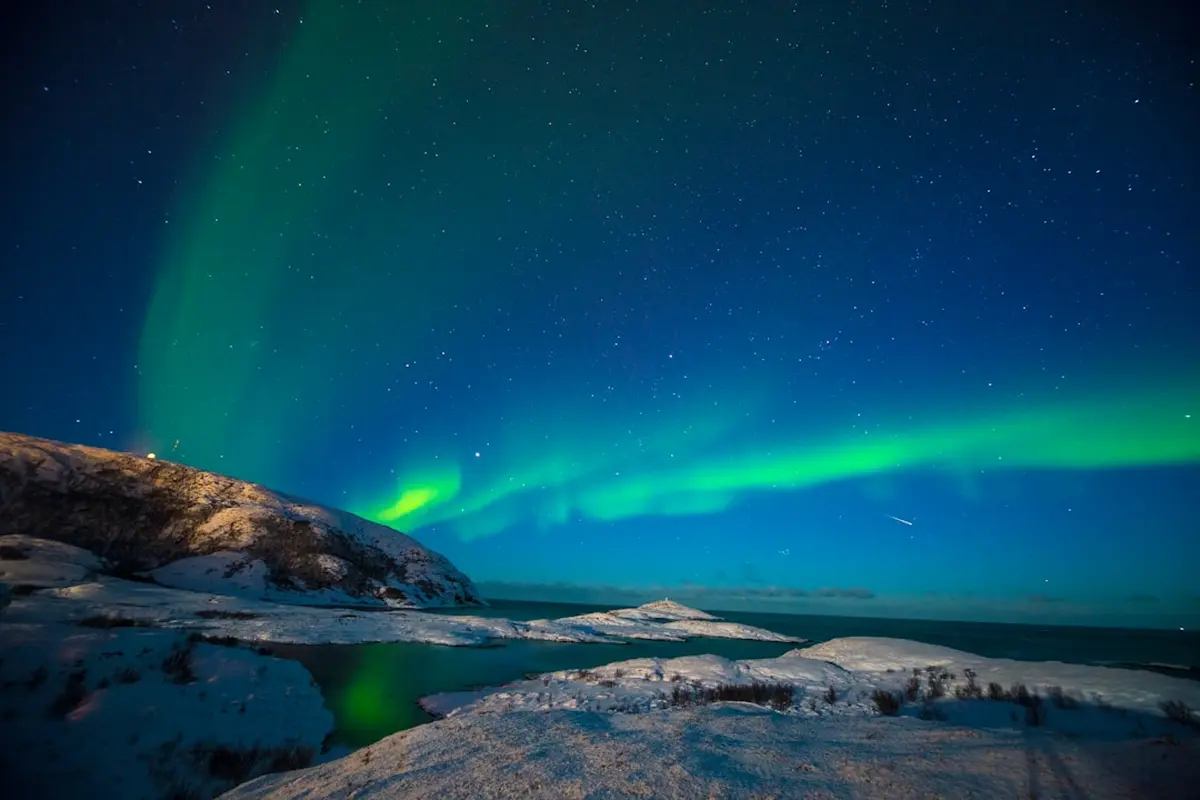
Before you pay anyone to drive you out of Tromso at night this winter, ask two questions: does the driver hold a Kjøreseddel, the commercial passenger transport licence issued by the Norwegian Public Roads Administration, and does the vehicle carry a Transportløyve sticker on the windscreen. If the answer to either is vague, walk. A joint inspection sweep of 44 aurora operators in the Tromso area found breaches of one or more regulations in more than half of them, and reporting on the crackdown has put the share of unlicensed operators in the city at close to half.
That is the whole of the advice. The rest of this explains where the risk sits, what the demand surge is doing to prices and availability, and what changed on Svalbard in January.
The two documents that separate a real operator from a rented SUV
The illegal operation is not sophisticated, which is precisely why there is so much of it. Norway's work-crime authority describes the setup bluntly.
All you need is a seven-seater or an SUV and someone who can drive. Suddenly, you have an aurora safari business.
Twelve foreign nationals, seven Malaysian and five Chinese, were expelled between September 2025 and January 2026 for running aurora safaris without work permits across Tromso, Lofoten, Ofoten, Nordland and Troms, using seven-seaters and SUVs rented in Sweden and Finland and recruiting customers through private social media groups. Authorities confiscated more than 100,000 kroner in earnings from one operation. By May 2026, NRK reported a cumulative 42 expulsions across the Nordland and Troms police districts, with operators coordinating in encrypted chat groups nicknamed nordlyspirater, swapping nine-seaters for five-seat cars to avoid attention and coaching passengers to say they were friends rather than paying customers.
The consequence for you is not abstract. One documented case left tourists sitting for hours in cold vehicles after drivers refused to continue in dangerous weather. Passengers on an unlicensed tour are not covered by commercial passenger insurance.
-
Ask for the Transportløyve and check the windscreen
Licensed commercial vehicles display the permit sticker. Roadside inspections target vehicles that do not.
-
Request a formal invoice before you pay
Authorities recommend this specifically. Operators avoiding tax will resist it.
-
Treat any guaranteed sighting as a red flag
Officials name this as a marker of an illegitimate seller. Nobody can guarantee the aurora.
-
Refuse tours sold only through a private chat group
Recruitment via closed social media groups rather than licensed channels was the pattern in all twelve expulsion cases.
-
Book through the official channels if you want the lowest-risk route
Visit Norway's portal, the Tromso Tourist Information Centre, or established coastal operators such as Hurtigruten and Havila Voyages.
What the surge has done to prices and dates
Norway logged 40.6 million commercial guest nights in 2025, its first year above 40 million, with international guest nights up 14 percent to 14.2 million. Northern Norway specifically saw commercial overnight stays rise 6 percent in 2025 and international guest nights rise 16 percent. February 2026 set an all-time monthly record of 1.9 million hotel guest nights nationally, and Tromso hotel prices that month ran at close to double the national average.
The practical read: January and February in Tromso are where the price pressure concentrates, so if you have flexibility, the darker end of autumn and the March tail are where availability and rates are less punishing. A caveat on the framing you will see elsewhere. Nothing in the enforcement or tourism reporting constitutes a geomagnetic forecast for 2026-27. What is documented is a demand record, not a guaranteed aurora record. If you want to judge conditions yourself rather than trust a seller's confidence, compare the aurora forecast apps before you commit to specific nights.
Alta, Narvik and Lofoten if Tromso is full
Norwegian tourism bodies are actively promoting Alta, the Lofoten Islands and Narvik as decongested alternatives to Tromso. Alta sits above the Arctic Circle and pairs aurora tracking with daytime activity, Arctic landscape backdrops and Sami cultural experiences, which makes it the better choice if you want a trip that still works on cloudy nights. It is the wrong choice if you need the density of flight connections and late-night restaurants that Tromso has.
The licensing checks above apply identically in Alta and Lofoten. Expulsions in the crackdown covered Lofoten and Ofoten as well as Tromso. If the goal is a camera-first trip, sort out settings and gear before you arrive rather than in a dark car park at minus 15. Outside Norway entirely, Fodor's names Fairbanks and Churchill as lower-risk aurora bases.
Adding Svalbard means new paperwork
Svalbard's field safety regulations took effect on 1 January 2026, and they change the lead times. Under the Governor of Svalbard's rules, commercial operators running paid activity outside the inhabited areas must apply for a permit at least eight weeks before the activity starts. If you are travelling independently outside the designated travel area, you apply at least four weeks before departure and must have approval in hand before you leave.
Insurance minimums are set per incident by zone: 120,000 NOK in Zone A, 350,000 NOK in Zone B, 650,000 NOK in Zone C. Longyearbyen centre, Svalbard Airport Longyear, Pyramiden, Barentsburg and Ny-Ålesund count as inhabited areas and sit outside the guide requirement. That guide requirement, meaning only approved Svalbard guides may lead trips beyond the settlements, starts on 1 July 2027, with experienced guides able to apply for dispensation by documenting 1,500 hours of guiding over three years before the 1 January 2027 cutoff. So for this coming season the certification rule does not yet bite, but the permit and insurance rules do.
Where this guidance runs out
Two things are not settled. Norway's national government is preparing a comprehensive tourism management plan due in autumn 2026, and Tromso is seeking pilot-municipality status to get visitor-management powers ahead of it, so the rules you book under in September may not be the rules that apply in March. Tromso, Balsfjord, Karlsøy, Lyngen and Storfjord have meanwhile issued joint operator guidelines covering legal compliance, winter driving, parking, waste and conduct around residents at night, built on expedition-cruise practice. They are guidelines, not law.
Separately, this article carries no information on Jan Mayen access rules. If an expedition-cruise add-on there is part of your plan, verify it with the operator and the relevant authority directly rather than assuming the Svalbard framework transfers.
Comments
No comments yet. Be the first to comment!
Leave a Comment